
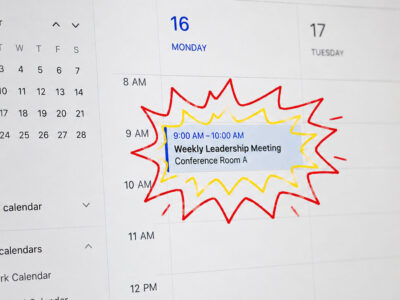
Monday morning. You’re already behind.
There’s a callback from Friday that nobody told you about.
Your CSR is out sick, and no one’s covering the phones the way you need.
One of your techs texted at 6 AM — the truck won’t start.
And somewhere in your inbox is a supplier invoice you don’t remember approving.
You spend the first two hours putting out fires. By noon, you’ve solved four problems that shouldn’t have been yours to solve. By 3 PM, you’re behind on the schedule, short on patience, and already dreading tomorrow.
Now here’s the part that hurts.
Next Monday will look exactly the same. Different fires. Same chaos. Same feeling that the business runs on your ability to react faster than everything falls apart.
And if someone suggested you sit down for a 90-minute meeting in the middle of all that, you’d laugh. Or curse. Or both.
I get it. I’ve heard it a hundred times.
“I don’t have time for meetings. I barely have time to eat.”
But here’s what I’ve learned coaching some of the most successful companies in the trades…
You’re not too busy for a meeting. You’re too busy because you don’t have good meetings.
Why the Same Problems Keep Coming Back
Think about the last month. How many of the problems you dealt with were new?
Not many. Most of them were repeat offenders. The same scheduling breakdowns. The same miscommunications. The same technician issues. The same financial surprises.
They keep coming back because they never actually get solved. They get patched. You react, you fix it in the moment, and you move on. But nobody ever sits down, identifies the root cause, talks it through, and assigns someone to own the solution.
That’s not a leadership failure. It’s a structural one. You don’t have a place where problems go to die.
That’s what a weekly leadership meeting is supposed to be. Not a status update. Not a complaints session. Not an hour of talking that ends with everyone more confused than when they sat down.
A real meeting — a structured one — is the place where the business gets fixed. Sixty to Ninety minutes. Same day. Same time. Every single week.
What 60 to 90 Minutes Actually Looks Like
The best-run companies in the trades don’t have more time than you do. They have a rhythm. And that rhythm starts with one meeting built on a simple structure.
It opens with five minutes of personal wins. Not fluff — connection. It sets the tone so the room doesn’t start with negativity.
Then the scorecard. Five minutes. You review the numbers that tell you whether the business is healthy this week. If a number is off track, you don’t debate it right then — you drop it on the issues list and keep moving.
Next, you check your quarterly goals. Are the big priorities for the next 90 days on track or off? Again — if something’s off, it goes on the list.
Then you review last week’s to-do items. Did people do what they said they’d do? Yes or no. No stories. No excuses. Just accountability.
And then you spend the bulk of the time — 30 to 60 minutes — on the issues list. You take the most important problem, and you work it. Identify the real issue. Discuss it. Solve it. Assign an owner and a deadline. Then you move to the next one.
You close by recapping the decisions, confirming who owns what, and rating the meeting on a scale of 1 to 10. If it’s not an 8 or higher, you fix the meeting itself.
That’s it. Sixty to Ninety minutes. No rambling. No rabbit holes. No “we’ll figure it out later.” Problems go in. Solutions come out. Every week.
What Changes When the Meeting Becomes Sacred
The word I use is sacred. Not optional. Not “when we have time.” Sacred.
The only acceptable reasons to miss it are illness or pre-approved time off. Everything else waits.
When you protect that meeting — when your team knows it’s happening no matter what — something shifts.
Problems stop piling up because they have a place to go. Your team stops bringing every issue to you in the hallway because they know it’ll get handled on Monday. You stop reacting to everything because you’re getting ahead of it.
The fires don’t disappear overnight. But they start getting smaller. And less frequent. Because you’re not just putting them out anymore — you’re removing what caused them.
The companies I’ve coached that commit to this rhythm — truly commit, not try-it-for-three-weeks commit — say the same thing: “It’s the most valuable 90 minutes of our week.”
Not because the meeting is fun. Because the meeting is where the business actually gets better.
A question for you.
How many of the problems you solved this week are the same ones you solved last month?
If the answer is most of them, you don’t have a people problem or a time problem. You have a rhythm problem. And one meeting can fix it.
So ask yourself — do you have a weekly leadership meeting right now? And if you do, is it actually solving anything?
If the answer is no (or if you’re not sure), that’s exactly the kind of structural problem we help owners fix.
The Growth Table system installs a weekly, monthly, and quarterly rhythm that turns reactive management into proactive leadership. Not theory. Not a template you’ll never use.
A real operating system that makes the business run without everything flowing through you.
 From Yellow Pages to Millions: How Simple Principles Built My Career in HVAC


Leave a Reply